Open-Box, Seller-Refurbished, and Manufacturer-Refurbished Are Not the Same Product
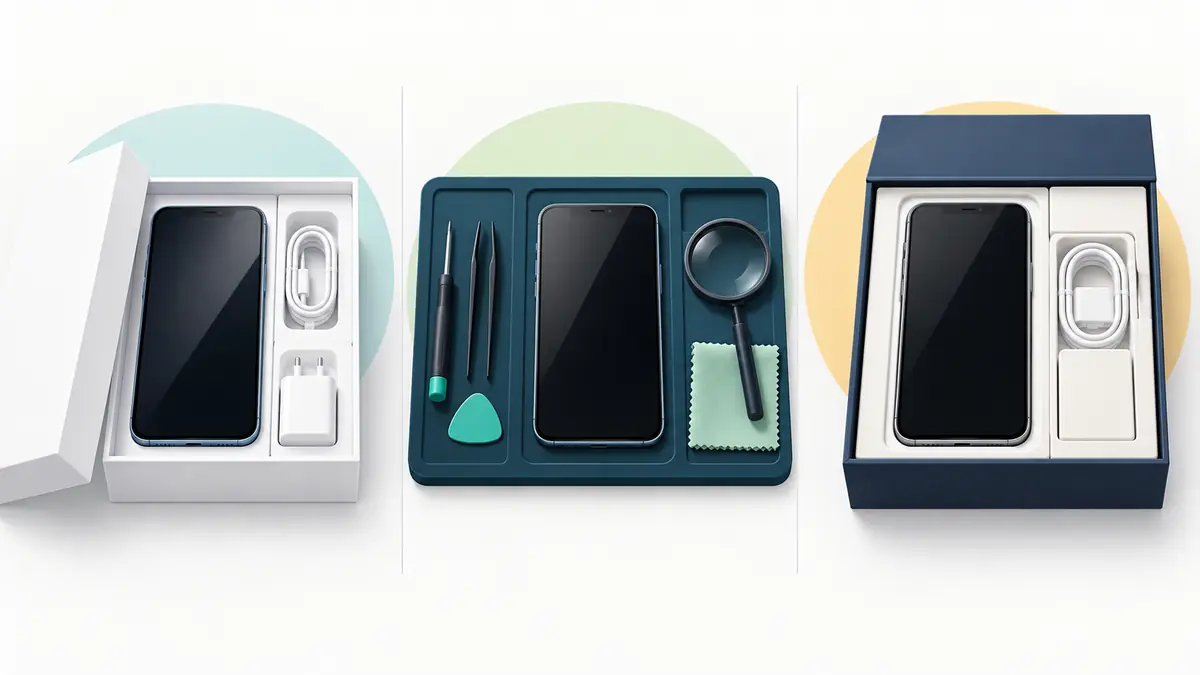
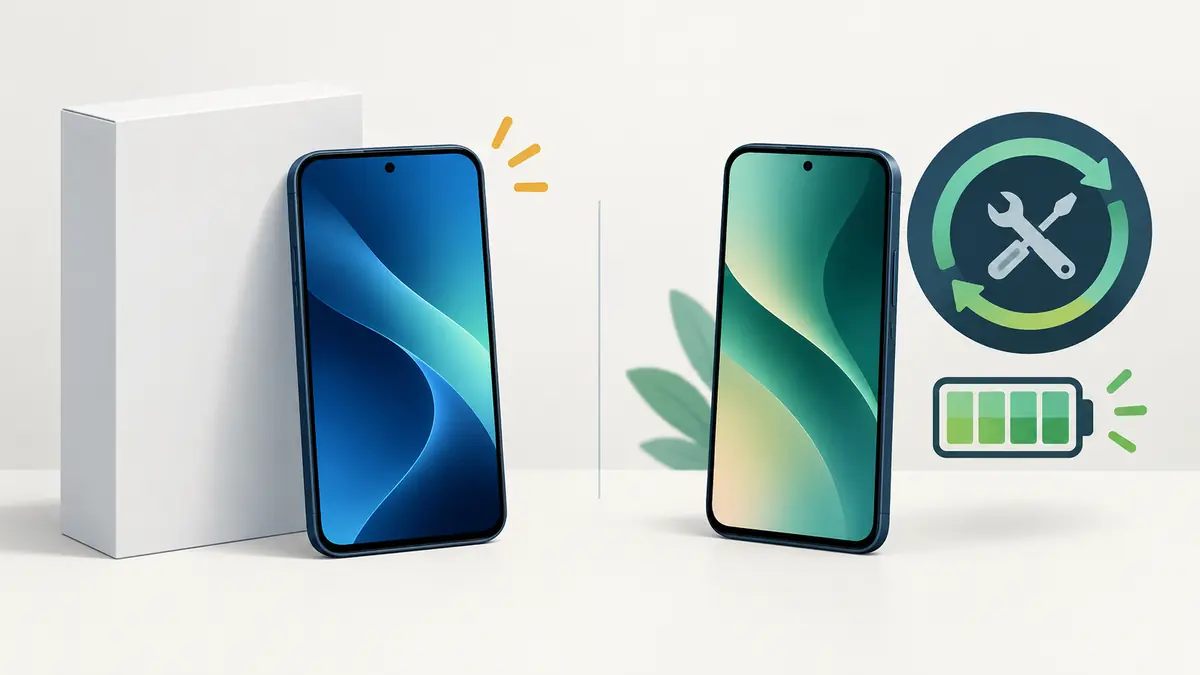
Open-box, seller-refurbished, and manufacturer-refurbished devices can all arrive in plain packaging at a discount. That similarity ends at the box. The labels describe different custody, inspection, repair, parts, and warranty paths. Treating them as one product category hides the information that determines whether the discount is worth taking.
A buyer should be able to trace five events: who first sold the device, why it returned, who inspected it, who repaired it, and who is responsible now. Each label answers only part of that chain.
Open-box: a return status, not a repair process
Open-box generally means the original package was opened and the item returned, displayed, or otherwise removed from new sealed inventory. It may be nearly unused. It may also have been set up, carried, charged, or returned for a fault that the next inspection failed to reproduce.
The term does not promise refurbishment. A retailer may check that the device powers on and that accessories are present; another may run a longer functional inspection. Cosmetic sub-grades, if offered, follow the retailer’s own rules.
Ask why the item is open-box, what testing occurred, whether the original manufacturer warranty began with the first sale, and which accessories are missing. The answers belong in writing.
Seller-refurbished: the seller defines the process
A seller-refurbished device has been inspected, repaired, cleaned, reset, or graded by the seller or a contractor rather than through a program clearly operated by the original manufacturer. The work can be excellent, minimal, or somewhere between.
The seller should state its checklist, battery threshold, parts policy, cosmetic rules, quality-control process, warranty, and return period. Marketplace reputation helps, but it does not replace terms for the exact listing.
“Certified” has value only when the certification body and standard are named. A badge designed by the seller can still represent a good internal process, but it is not independent evidence.
Manufacturer-refurbished: a defined brand program
A manufacturer-refurbished device passes through a program run by or explicitly tied to the original maker. The program may use genuine parts, manufacturer diagnostics, new batteries or outer shells for certain product types, updated software, and a manufacturer warranty. The exact inclusions vary by brand, product, country, and date.
Apple’s Certified Refurbished program, for example, states its own testing and warranty terms. Samsung’s U.S. Certified Re-Newed phone program advertises genuine parts, a certified new battery, inspection, and a limited manufacturer warranty. Those statements describe those programs, not every device carrying the word refurbished.
The main benefit is a clearer responsible party and service path. The price is often higher than seller refurbishment, and inventory or model choice may be narrower.
These labels do not establish legal condition everywhere
Retail terms and consumer rights differ by country and state. A warranty, return policy, and service contract are separate documents. In the United States, the Federal Trade Commission advises buyers to read what a written warranty covers, how long it lasts, what remedy is offered, and who pays shipping or labor.
Do not assume “open-box” receives the full new-device warranty or that “manufacturer-refurbished” receives identical rights in every market. Read the local product page and warranty before payment. Save copies with the receipt.
When a seller makes a spoken promise, ask for it in the order confirmation. A checkout conversation is difficult to prove later.
Chain of custody changes risk
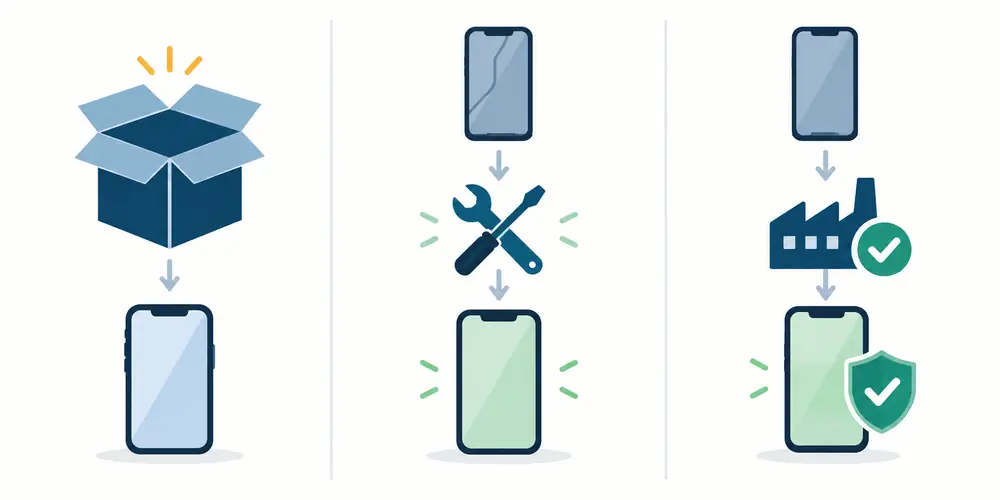
A new sealed device normally travels from maker to authorized distribution to buyer. An open-box unit adds an initial customer or display period. A seller-refurbished device may pass through returns auctions, trade-in aggregators, repair contractors, and marketplace storage. A manufacturer program can still use returned inventory, but the maker controls or warrants the defined refurbishment stage.
More steps do not automatically mean a bad device. They create more questions about account locks, liquid exposure, parts, data erasure, and handling. A strong refurbisher answers with tracking and tests.
Ask whether the serial number or device identifier is assigned before shipment and whether the seller checks lost, stolen, finance, carrier, enterprise, and activation status.
Inspection depth is the practical difference
A short open-box check may verify power, display, and accessories. A refurbishment program should test the systems most likely to fail: battery, storage, memory, cameras, microphones, speakers, radios, ports, buttons, sensors, biometrics, charging, and thermal behavior.
Request the checklist or a summary of pass criteria. “100-point inspection” is not informative without the points. One company can split ten visual checks into ten lines while another performs a long battery discharge as one item.
For a laptop, ask about storage health, memory diagnostics, keyboard, hinge, charger, firmware locks, and operating-system eligibility. For a phone, ask about battery capacity, water or frame damage, parts history, carrier bands, activation, and update status.
Battery policy often separates the programs
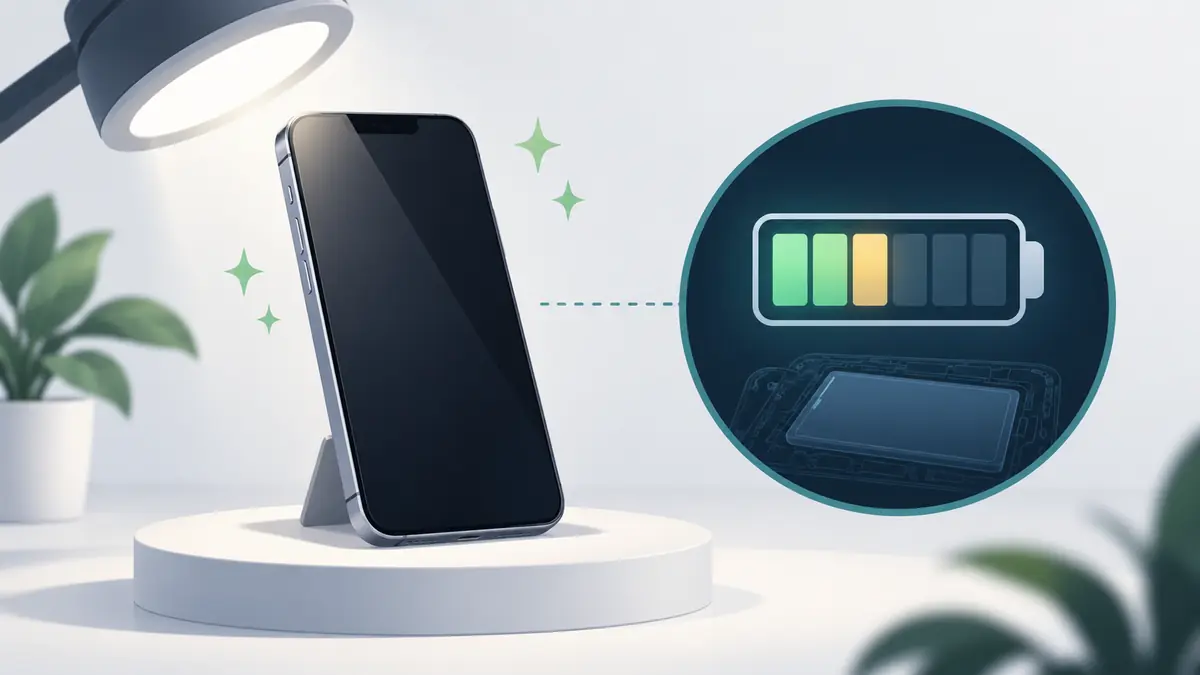
Open-box devices may retain the original battery with a small amount of use. Seller-refurbished units may guarantee a minimum capacity, replace only failing packs, or provide no measured threshold. Some manufacturer programs explicitly install a new battery for particular products.
Do not infer battery condition from cosmetic grade. Ask whether the battery is new, the guaranteed capacity floor, how it was tested, and how long that promise is covered. Price service at the guaranteed minimum.
A device that sat in storage can age even with few cycles. Test runtime, charging, idle drain, temperature, and sudden shutdown during the return period.
Parts disclosure affects more than purity
A replacement display can change brightness, color, touch, refresh behavior, biometrics, or power use. A battery can affect health reporting and peak performance. Cameras may require calibration. Parts messages can affect resale or future service.
Ask whether parts are manufacturer-supplied, reclaimed original, or third-party. “OEM quality” is not the same statement as an OEM part. If electronics were transferred from an original component, ask why and what the system will report.
Manufacturer programs usually provide the clearest parts policy, but verify the specific program. Seller refurbishment can also be transparent and high-quality when the invoice names the components.
Warranty identity matters
Write down who is legally responsible: manufacturer, retailer, marketplace seller, third-party administrator, or insurance provider. Record the length, covered components, exclusions, deductible, shipping, labor, and remedy.
A twelve-month manufacturer warranty with local service can be more useful than a two-year seller promise requiring international shipment. A reputable local refurbisher may provide faster help than either. Duration is only one quality.
Check whether the product is eligible for an optional manufacturer protection plan and whether you need one. A separately purchased service contract is not the same as the included warranty.
Return window is your inspection period
Returns cover problems that are not always warranty defects: uncomfortable keyboard, weak battery within an allowed threshold, cosmetic disagreement, missing accessory, or network incompatibility. The window should be long enough to update, restore, and test normal use.
Read restocking fees, condition requirements, return shipping, and whether the clock begins at order, shipment, delivery, or activation. Keep every insert and photograph the device on arrival.
Do not wait until the final day to report a lock, swelling battery, unstable port, or wrong specification.
Software support never restarts
None of the three labels changes the model’s original software timeline. An open-box phone, a seller-polished phone, and a manufacturer-rebuilt phone of the same generation generally have the same remaining platform support.
Calculate remaining security years from the manufacturer’s policy. Confirm the actual unit installs current updates. A device can be physically renewed and still be near the end of its secure primary-use period.
For laptops, check operating-system requirements and manufacturer firmware support. A clean installation does not make old hardware eligible for every future release.
Price the missing pieces
Open-box savings can disappear when the charger, stylus, keyboard, recovery media, or proprietary cable is absent. Seller-refurbished devices often ship with generic accessories. Manufacturer-refurbished packaging may include defined replacements, but read the contents list.
Add appropriate accessories, immediate battery service, storage or memory needs, shipping, tax, and a protection plan only if chosen. Subtract realistic resale. Divide by the supported years you expect to use.
A $50 discount is weak if the warranty loses ten months and a $60 charger is missing. A $200 discount can be excellent when the device is current, inspected, complete, and returnable.
Which category suits which buyer?
Open-box suits a buyer who wants a near-new model, can test quickly, and receives clear retailer returns and warranty. It is strongest when the history is simple and the discount reflects missing packaging or light cosmetic handling.
Seller-refurbished suits a buyer willing to evaluate the refurbisher’s process in exchange for price or model choice. It can be the best value when battery, parts, testing, and remedy are explicit.
Manufacturer-refurbished suits a buyer who values a defined brand program and warranty path but still wants a discount and reuse. It often reduces uncertainty rather than achieving the lowest price.
A ten-question comparison
- What exact event put the device in this category?
- Who inspected and who repaired it?
- Which functional tests and thresholds were used?
- What is guaranteed about the battery?
- Which parts were replaced and where did they come from?
- What accessories are included?
- Who provides warranty service, and what is the remedy?
- How long is the return window and who pays shipping?
- How many security-support years remain?
- What is the complete cost after missing items and likely repairs?
If a listing cannot answer the first five, classify it as used condition with unknown refurbishment and price the risk accordingly.
Test every category on arrival
Verify the serial and specifications, update the system, check account and management locks, inspect the enclosure, and test the battery, display, inputs, ports, cameras, sound, wireless, sensors, charging, sleep, and performance. Compare with the written grade.
Manufacturer refurbishment lowers uncertainty; it does not make testing unnecessary. Shipping damage, picking errors, and intermittent faults can happen in any channel.
Our used-laptop inspection guide provides a longer hardware sequence, while the new-versus-refurbished phone comparison explains battery and update costs.
How to describe the device at resale
Preserve the original category, refurbishment invoice, parts history, warranty work, battery data, and photographs. Do not call a seller-refurbished device manufacturer-refurbished later because a genuine part was used.
Accurate history supports buyer trust and a defensible price. Remove accounts, management, activation locks, and data through official procedures before transfer.
The practical answer
Open-box describes an opened or returned sales unit. Seller-refurbished describes a process controlled by the seller or its contractor. Manufacturer-refurbished describes a program backed by the original maker. They are not the same product because their histories, inspection standards, parts, and responsible parties differ.
Buy the documentation, not the adjective. Trace custody, read the test and battery thresholds, identify the warranty provider, calculate remaining software support, and test during the return window. A discount is valuable only after the missing certainty has been priced.
Make the seller’s category part of the written offer
When shopping for an iPhone 16 or Galaxy A56 5G, keep the product’s specifications separate from the seller’s description of its condition. Open-box and refurbished describe different histories, but neither phrase establishes the delivered battery condition, repair quality or warranty provider. Ask which work was done to this unit and who is responsible if it fails the agreed inspection.
Keep the seller’s answer with the invoice. The useful protection is an enforceable purchase arrangement you understand, not a premium-sounding label. If a listing changes between ordering and delivery, compare the device with the saved description while the return period remains open. This also gives you a more accurate account of its history when you eventually resell it.
| Keep in your decision record | What to write down |
|---|---|
| Advertised category | Save the exact wording and the seller’s identity. |
| Unit-specific work | List inspection, repair and replacement details disclosed. |
| Return condition | Record the remedy if the delivered unit differs. |
Apply the guide to a real shortlist:
Updated October 10, 2026: added a practical application and decision record. This documentation-based guide uses estimates where stated; individual condition, repair costs and regional support vary.